Spike: Seed Incubator and Monitoring Platform
This is the engineering journal for the seed incubator spike. With the sensor platform validated, I needed to answer: does the monitoring platform actually help during germination?
The Spike Question
Can we build a monitored seed incubator that provides useful data during germination, and does continuous sensing actually improve outcomes?
Why Arugula and Dill?
I evaluated several crop categories before choosing test plants:
Peppers — Need 80-85°F soil temp and 14-30+ days to germinate (superhots even longer). Too slow for a quick validation spike.
Mint and rosemary — Require cuttings, not seeds. True peppermint is a sterile hybrid; rosemary seeds have ~30% germination and take weeks. Not suitable for seed incubator testing.
Cilantro — Has a sensitive taproot that doesn’t tolerate transplanting. Heat promotes bolting. Must be direct-sown outdoors, so it skips the incubator entirely.
Arugula and dill — Fast germinators (5-10 days), tolerate a range of conditions, and transplant well. Perfect for validating the incubator before committing to slower crops.
Incubator Assembly
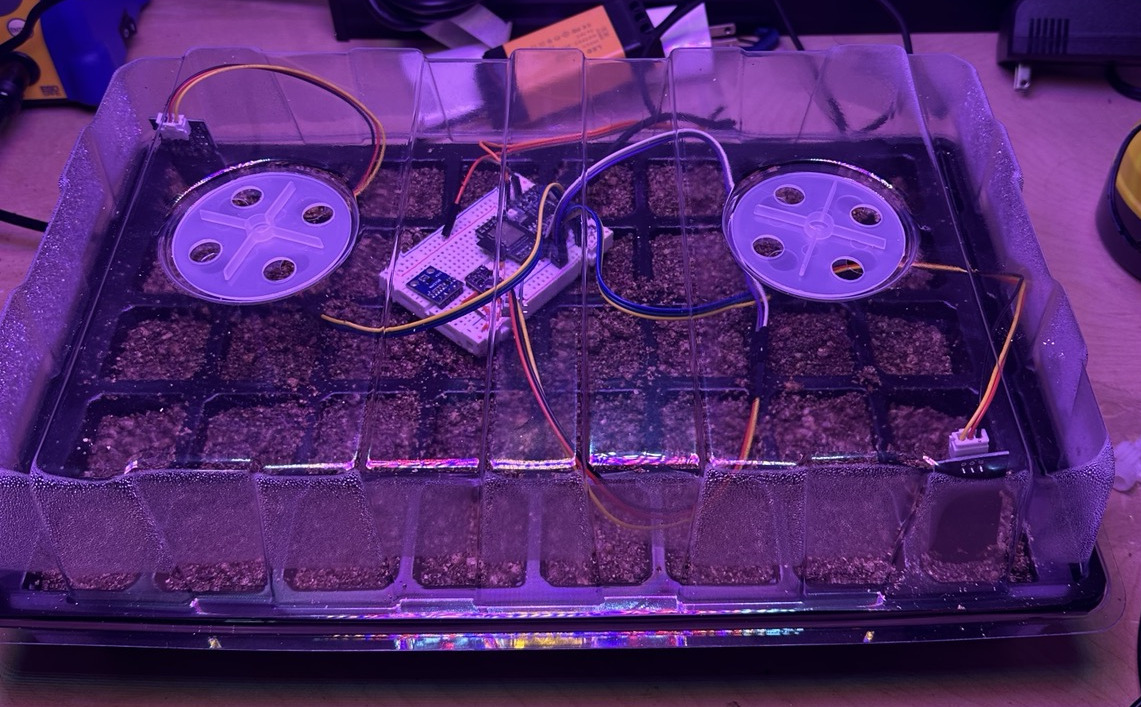
The incubator is a 40-cell tray (1.4” x 1.4” cells) inside a solid bottom tray with a clear humidity dome. The Plant Caravan board sits at the tray edge with three capacitive soil probes distributed across the tray, the BMP280 measuring ambient conditions, and the BH1750 tracking grow light exposure.
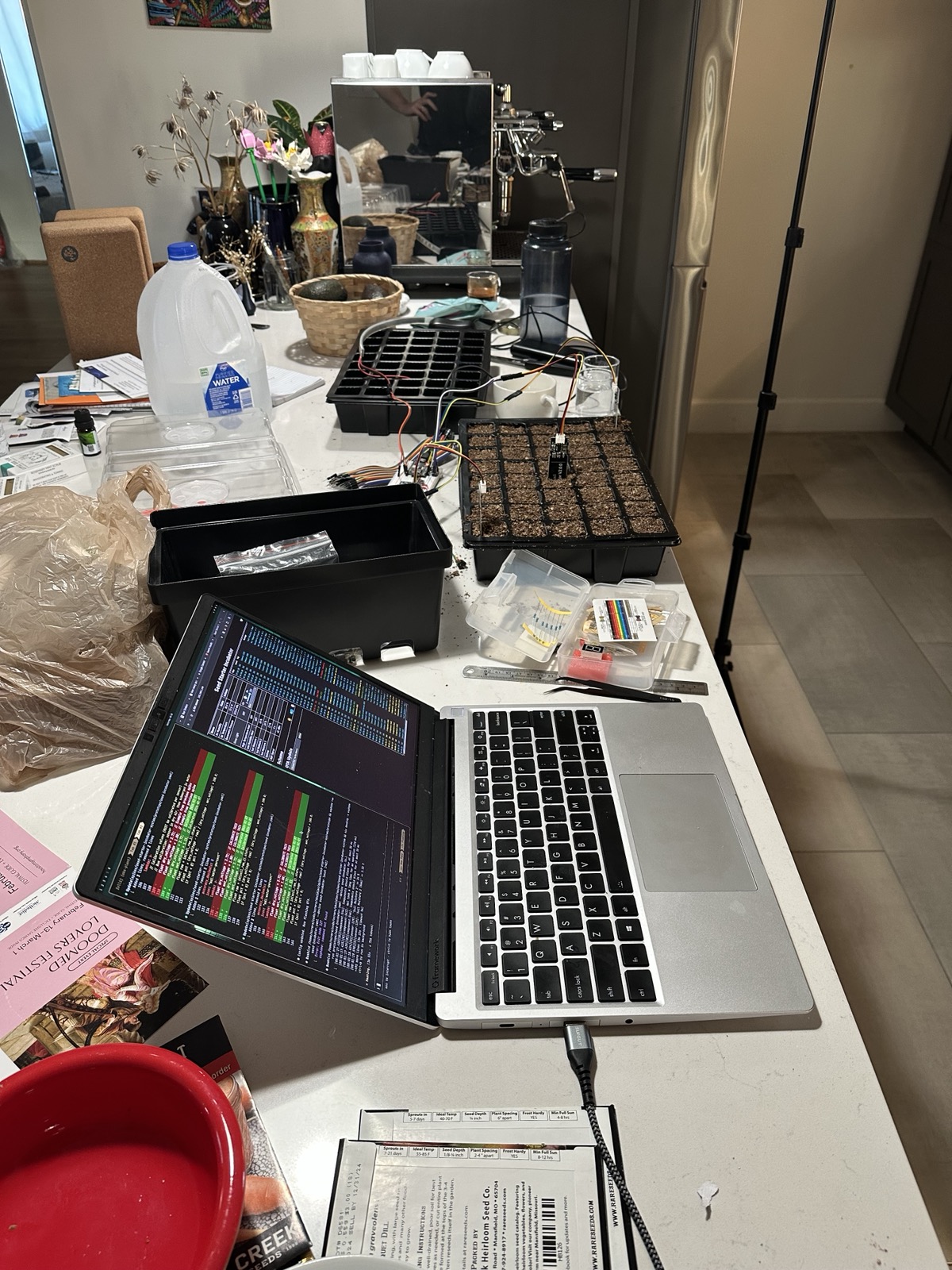
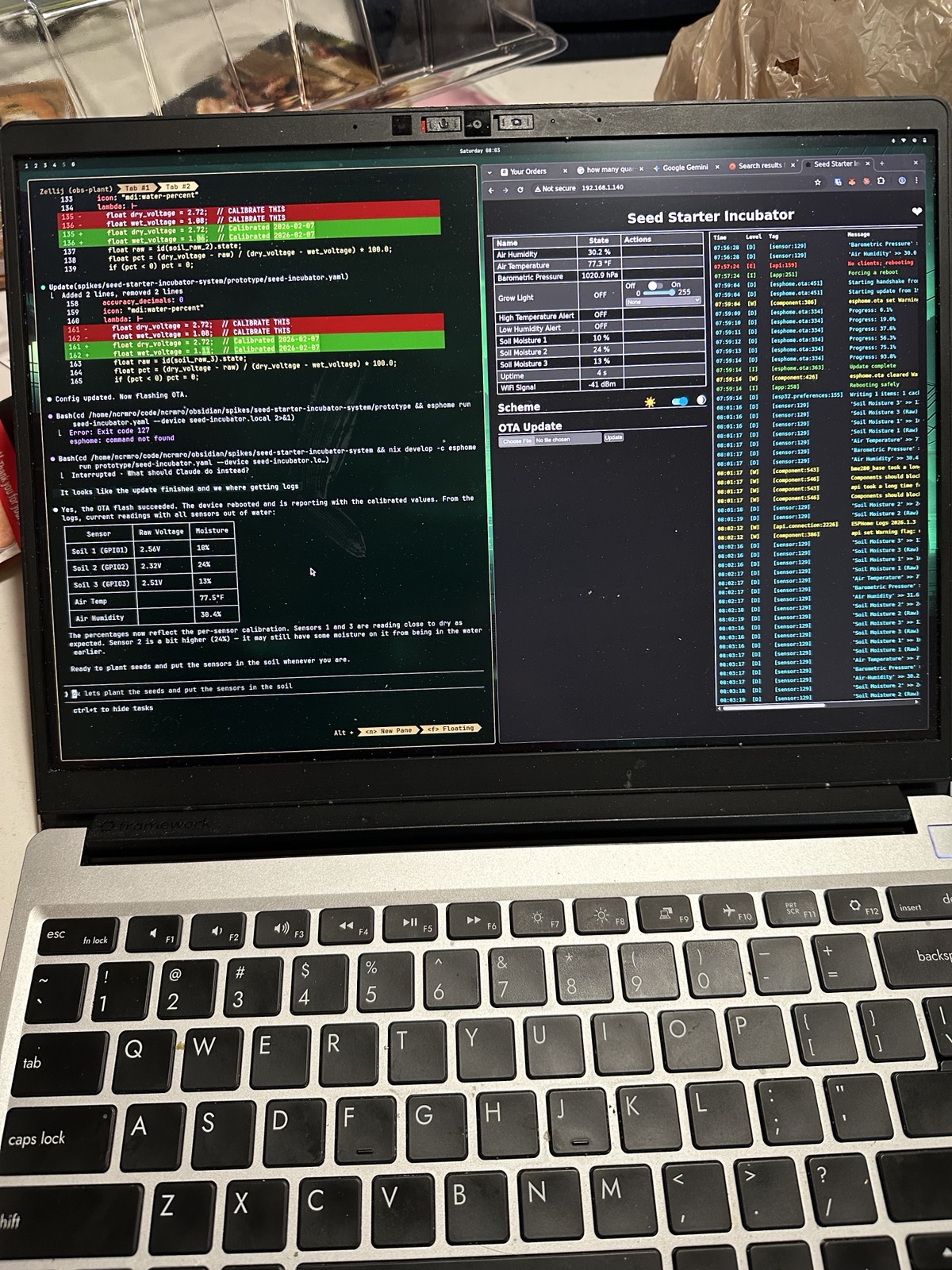
Two seeds per cell to hedge against germination failure.
The Lighting Problem
I initially tried using WS2812B LED strips mounted on the humidity dome. The BH1750 showed they only delivered ~572 lux — far below the 2000-3000 lux seedlings need. The prediction was clear:
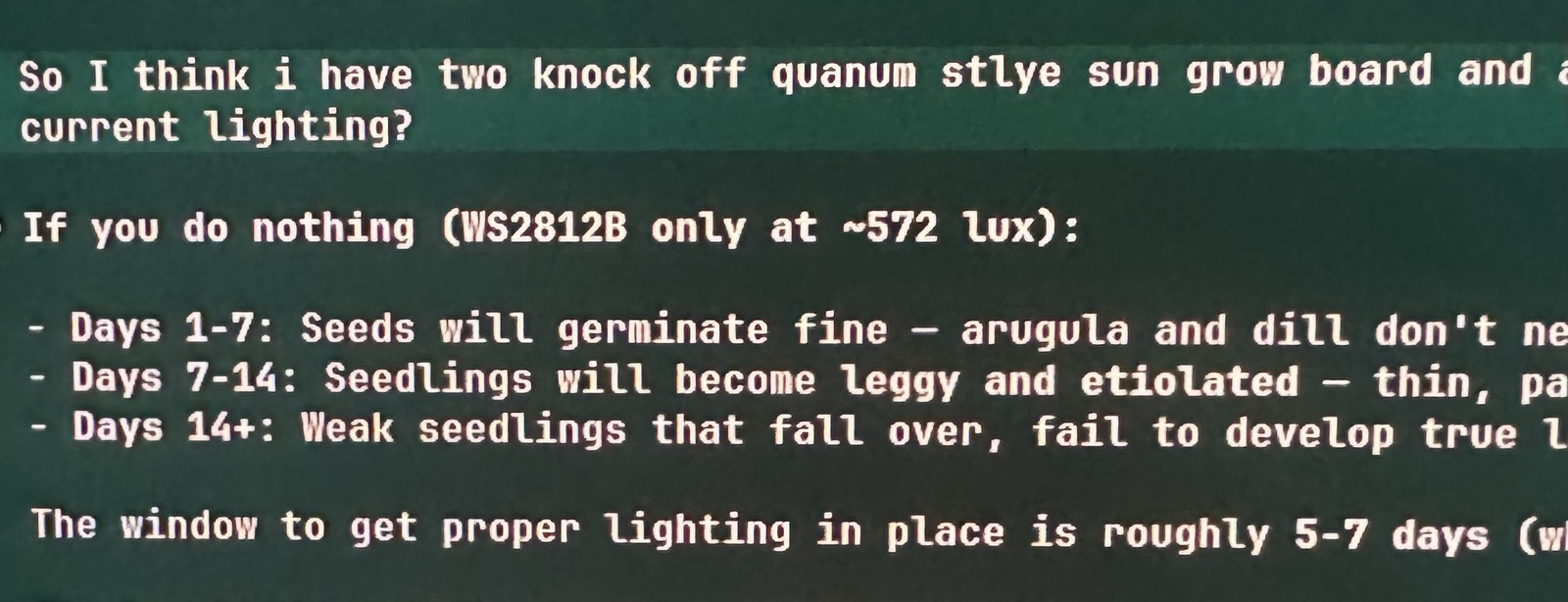
- Days 1-7: Seeds germinate fine (arugula and dill don’t need light to sprout)
- Days 7-14: Seedlings become leggy and etiolated — thin, pale, stretching for light
- Days 14+: Weak seedlings that fall over and fail to develop true leaves
The window to get proper lighting in place is roughly 5-7 days after planting.
My friend John had some proper quantum board style grow lights he wasn’t using. I plugged them into a smart outlet to handle the 16-hour on/off schedule automatically.
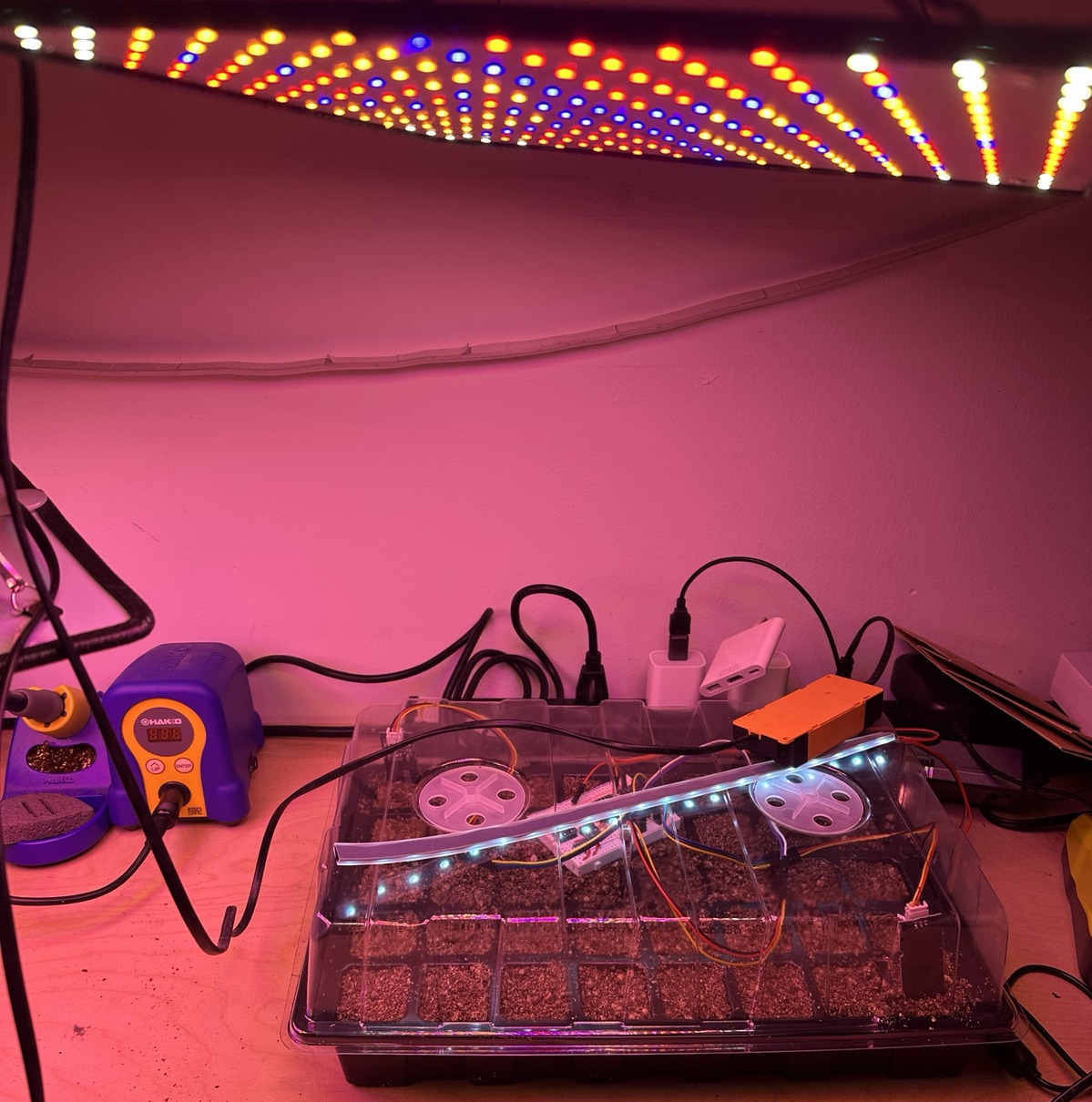
The difference was immediate — the BH1750 now showed ~3000 lux at tray level, adequate for healthy seedling growth.
Results
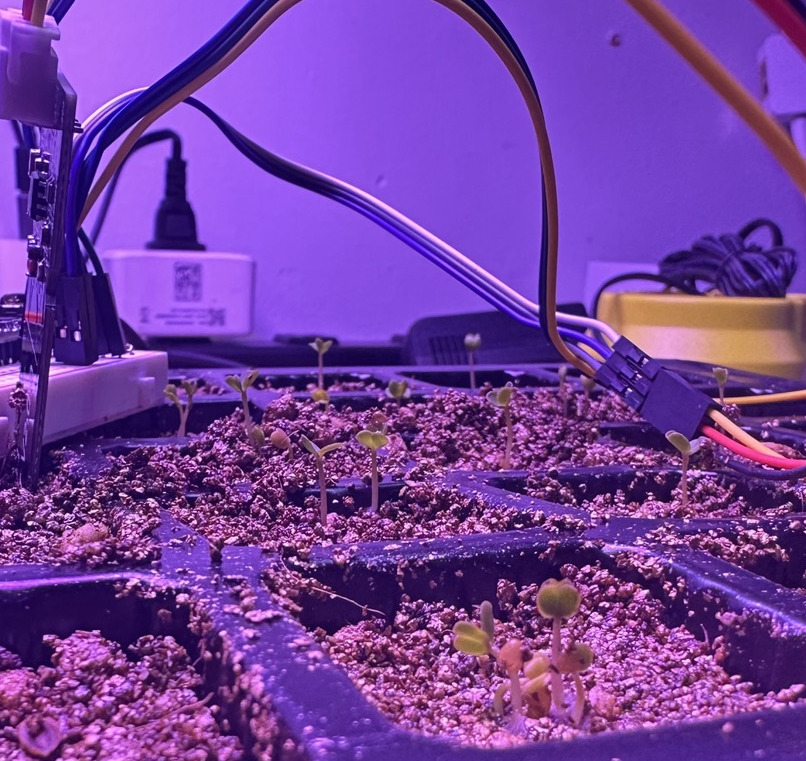
First sprouts appeared on day 5 — arugula, as expected. By day 8, visible growth in most cells. Dill followed a day or two behind.
What the Sensors Showed
The monitoring platform earned its keep. Instead of guessing conditions, I had continuous data:
- Humidity dome works — BMP280 inside the dome reads 75-85% RH compared to 35-40% room ambient. Only needed to bottom-water once in 10 days vs every 2-3 days without a dome.
- Night temperature dips are real — Room drops to 68°F at night, but the heat mat keeps soil at 75°F. Without monitoring, I wouldn’t have known the mat was compensating correctly.
- Light levels confirmed — The BH1750 validated that the grow lights deliver adequate lux after the LED strip experiment failed.
Spike Conclusion
The monitored incubator works. Key findings:
- Continuous soil moisture data reduced watering frequency from every 2-3 days to once per week
- Temperature monitoring confirmed heat mat effectiveness during overnight dips
- Light monitoring caught the LED strip problem before seedlings suffered
- Arugula and dill both germinated within expected timeframes with high success rate
Next Steps
- Try slower-germinating crops (peppers, basil) that benefit more from precise temperature control
- Collect 30 days of continuous data to establish baseline patterns
- Evaluate whether automated watering warrants a follow-up spike
All firmware and configs are open source — see the GitHub repo.